SICP:1.2.2 Tree Recursion
SICP:1.2.2 Tree Recursion
本文逐段翻译 SICP 第二版 §1.2.2《Tree Recursion》,保留 Fibonacci、Figure 1.5、golden ratio、iterative transformation、Counting Change、Pascal's triangle、公式图件以及 Exercises 1.11–1.13 的原文顺序。
TL;DR
- Tree recursion 是另一种常见的 computation pattern;
fib每次调用自身两次,生成一棵 process tree。 - 直接的 tree-recursive Fibonacci procedure 有大量 redundant computation:time 随 input 指数增长,而 space 只随 tree depth 线性增长。
- 同一个 Fibonacci function 可以改写为 linear iteration;tree recursion 虽然低效,但在 hierarchical data 上自然,也通常更容易 specify 与 understand。
- Counting change 展示了如何用 recursive decomposition 表达组合计数问题;memoization 可以消除部分 redundant computation。
目录
| 章节 | 说明 |
|---|---|
| 1.2.2 Tree Recursion | Fibonacci 的 tree-recursive process |
| Iterative Fibonacci | 用两个 state values 线性计算 Fibonacci |
| Example: Counting change | 递归计算找零方式 |
| Exercises 1.11–1.13 | recurrence、Pascal triangle 与 Fibonacci proof |
1.2.2 Tree Recursion
另一种 common pattern 的 computation 称为 tree recursion。作为例子,考虑计算 Fibonacci numbers 的 sequence:其中每个 number 都是前面两个 numbers 的 sum:

一般而言,Fibonacci numbers 可以由以下 rule 定义:

我们可以立即把这个 definition 翻译成一个计算 Fibonacci numbers 的 recursive procedure:
(define (fib n)
  (cond ((= n 0) 0)
        ((= n 1) 1)
        (else (+ (fib (- n 1))
                 (fib (- n 2))))))
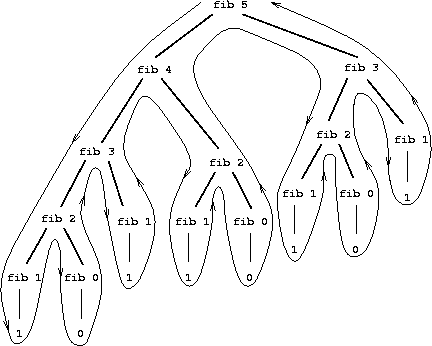
Figure 1.5: 计算 (fib 5) 时生成的 tree-recursive process。
观察这个 computation 的 pattern。为了计算 (fib 5),我们计算 (fib 4) 和 (fib 3)。为了计算 (fib 4),我们计算 (fib 3) 和 (fib 2)。一般而言,evolved process 看起来像一棵 tree,如 Figure 1.5 所示。注意,在每个 level 上(底部除外),branches 都分裂成两个;这反映了 fib procedure 每次被 invoked 时都会调用自己两次。
这个 procedure 作为 prototypical tree recursion 很 instructive,但它是计算 Fibonacci numbers 的 terrible way,因为它执行了大量 redundant computation。注意 Figure 1.5 中,整个 (fib 3) 的 computation——几乎一半的 work——被 duplicated。实际上,不难证明,procedure 计算 (fib 1) 或 (fib 0) 的次数(也就是上面 tree 的 leaves 数量,一般而言)恰好是 Fib(n + 1)。
为了了解这有多糟,可以证明 Fib(n) 随 n exponentially growth。更 precisely 地说(见 Exercise 1.13),Fib(n) 是下面这个 value 的 closest integer:
 <sup>
n</sup> /  <sup>5</sup>
其中:

是 golden ratio,它满足 equation:

因此,这个 process 使用的 steps 数量随 input 指数增长。另一方面,所需的 space 只随 input 线性增长,因为在 computation 的任意 point,我们只需要记录 tree 中位于当前 node 上方的 nodes。一般而言,tree-recursive process 所需的 steps 数量与 tree 中的 nodes 数量 proportional,而所需的 space 与 tree 的 maximum depth proportional。
Iterative Fibonacci
我们也可以 formulate 一个计算 Fibonacci numbers 的 iterative process。Idea 是使用一对 integers a 和 b,将它们初始化为 Fib(1) = 1 和 Fib(0) = 0,然后 repeated apply 以下 simultaneous transformations:

不难证明,应用这个 transformation n 次之后,a 和 b 将分别等于 Fib(n + 1) 和 Fib(n)。因此,我们可以使用以下 procedure 以 iterative 方式计算 Fibonacci numbers:
(define (fib n)
  (fib-iter 1 0 n))

(define (fib-iter a b count)
  (if (= count 0)
      b
      (fib-iter (+ a b) a (- count 1))))
第二种计算 Fib(n) 的 method 是 linear iteration。两个 methods 所需 steps 数量的 difference 非常 enormous:一个与 n linear,另一个的增长速度与 Fib(n) 自身一样快,即使 input 很小也是如此。
不要因此就得出 tree-recursive processes useless 的结论。当我们考察操作 hierarchical structured data 而不是 numbers 的 processes 时,会发现 tree recursion 是 natural 且 powerful 的 tool1。即使在 numerical operations 中,tree-recursive processes 也能帮助我们 understand 和 design programs。例如,第一个 fib procedure 虽然比第二个低效得多,但它更 straightforward,几乎只是把 Fibonacci sequence 的 definition 翻译成 Lisp。要 formulate iterative algorithm,则必须注意到 computation 可以被重新 cast 成使用三个 state variables 的 iteration。
Example: Counting change
想出 iterative Fibonacci algorithm 只需一点 cleverness。相反,考虑以下 problem:给定 half-dollars、quarters、dimes、nickels 和 pennies,换出 $1.00 有多少种 different ways?更一般地说,我们能否写一个 procedure,计算任意给定 amount of money 的 change ways?
这个 problem 有一个 simple solution,可以写成 recursive procedure。假设我们把可用的 coin types 按某种 order 排列。那么以下 relation 成立:
使用 n kinds of coins 换出 amount a 的 ways 数量,等于:
- 使用除第一种 coin 外的所有 coin types 换出 amount
a的 ways 数量;加上 - 使用全部
nkinds of coins 换出 amounta - d的 ways 数量,其中d是第一种 coin 的 denomination。
要理解为什么成立,注意可以把 change ways 分成两组:不使用第一种 coin 的 ways,以及使用第一种 coin 的 ways。因此,为某个 amount 换 change 的 total ways,等于不使用第一种 coin 为该 amount 换 change 的 ways,加上假设使用第一种 coin 时的 ways。后一个数量等于先使用一枚第一种 coin 后,对剩余 amount 换 change 的 ways 数量。
因此,我们可以根据这个 reduction rule,把为给定 amount 换 change 的问题递归地 reduction 为:用 fewer kinds of coins 换出 smaller amounts 的问题。仔细考虑这个 reduction rule,并指定以下 degenerate cases,就可以用它描述一个 algorithm2:
- 如果
aexactly 为0,应当把它计作 1 种 change way。 - 如果
a小于0,应当把它计作 0 种 change ways。 - 如果
n为0,应当把它计作 0 种 change ways。
我们可以很容易地把这个 description 翻译成 recursive procedure:
(define (count-change amount)
  (cc amount 5))

(define (cc amount kinds-of-coins)
  (cond ((= amount 0) 1)
        ((or (< amount 0) (= kinds-of-coins 0)) 0)
        (else (+ (cc amount
                     (- kinds-of-coins 1))
                 (cc (- amount
                        (first-denomination kinds-of-coins))
                     kinds-of-coins)))))

(define (first-denomination kinds-of-coins)
  (cond ((= kinds-of-coins 1) 1)
        ((= kinds-of-coins 2) 5)
        ((= kinds-of-coins 3) 10)
        ((= kinds-of-coins 4) 25)
        ((= kinds-of-coins 5) 50)))
(first-denomination procedure 接受 available coin kinds 的数量作为 input,并返回第一种 coin 的 denomination。这里假设 coins 按从 largest 到 smallest 的顺序排列,但任何 order 都可以。)
现在可以回答最初关于换出 one dollar 的问题:
(count-change 100)
292
count-change 生成了一个 tree-recursive process,其中有与 fib 的第一个 implementation 相似的 redundancies。(计算出这个 292 要花相当长时间。)另一方面,如何 design 一个更好的 algorithm 来计算这个 result 并不 obvious,因此我们把这个 problem 留作 challenge。
Tree-recursive process 可能 highly inefficient,却通常 easy to specify and understand;这一 observation 促使人们提出,可以设计一个“smart compiler”,把 tree-recursive procedures transform 成计算相同 result 的更 efficient procedures3。
Exercises 1.11–1.13
Exercise 1.11
Function f 由以下 rule 定义:当 n < 3 时,f(n) = n;当 n ≥ 3 时,f(n) = f(n - 1) + 2f(n - 2) + 3f(n - 3)。写一个通过 recursive process 计算 f 的 procedure;再写一个通过 iterative process 计算 f 的 procedure。
Exercise 1.12
下面的 numbers pattern 称为 Pascal's triangle:
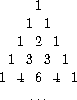
Triangle 边缘的 numbers 都是 1,triangle 内部的每个 number 都是它上方两个 numbers 的 sum4。写一个通过 recursive process 计算 Pascal's triangle elements 的 procedure。
Exercise 1.13
证明 Fib(n) 是以下 value 的 closest integer:
<sup>n</sup> / <sup>5</sup>
其中:
= (1 + <sup>5</sup>) / 2
提示:令
 = (1 - <sup>5</sup>) / 2。
使用 induction 和 Fibonacci numbers 的 definition(见 §1.2.2),证明:
<sup>n</sup> - <sup>n</sup>
Fib(n) = <sup>5</sup>
图与格式复核
- Fibonacci sequence formula、Figure 1.5、golden ratio、Fibonacci transformation 与 Pascal's triangle 均保留原始 GIF;行内数学符号图件按原文位置嵌入。
fib的 recursive/iterative implementations、count-changeprocedure 与 Exercises 1.11–1.13 保持原文顺序。- Figure 1.5 原始尺寸为
432 × 346;Pascal's triangle 原始尺寸为77 × 100。
术语对照
| English | 译法/处理 |
|---|---|
| tree recursion | 保留 tree recursion;必要处译作树递归 |
| redundant computation | 保留 redundant computation;必要处译作冗余计算 |
| golden ratio | 保留 golden ratio;必要处译作黄金比例 |
| successive transformation | 保留 transformation;必要处译作变换 |
| counting change | 保留 counting change;必要处译作找零计数 |
| denomination | 保留 denomination;必要处译作面额 |
| degenerate case | 保留 degenerate case;必要处译作退化情况 |
| tabulation / memoization | 保留 tabulation、memoization;必要处译作制表、记忆化 |
| binomial coefficient | 保留 binomial coefficient;必要处译作二项式系数 |
参考资料
- Harold Abelson、Gerald Jay Sussman、Julie Sussman:SICP 第二版 MIT Press 页面
- SICP HTML full text
- MIT OCW 6.001 Readings
-
原文脚注指出,§1.1.3 已经暗示过一个例子:interpreter 自身使用 tree-recursive process 来 evaluation expressions。 ↩
-
原文脚注建议,详细演练 reduction rule 如何应用于使用 pennies 与 nickels 换出 10 cents 的问题。 ↩
-
原文脚注介绍 tabulation 或 memoization:每次 procedure 被要求处理某个 argument 时,先检查该 value 是否已存入 table;这样可以避免 redundant computation。它有时能把需要 exponential steps 的 processes(如
count-change)转化为 time/space requirements 随 input linear growth 的 processes。 ↩ -
Pascal's triangle 的 elements 称为 binomial coefficients,因为第
n行包含(x + y)^n展开式各 terms 的 coefficients。这个 computation pattern 见于 Pascal 1653 年关于 probability theory 的 seminal work,也见于 1303 年中国数学家朱世杰的《四元玉鉴》、十二世纪波斯诗人兼数学家 Omar Khayyam 的作品,以及十二世纪印度数学家 Bhāskara Ācārya 的作品。 ↩
评论 (0)