Crafting Interpreters:Scanning
Crafting Interpreters:Scanning
作者:Robert Nystrom
原文章节:4 Scanning

TL;DR
本章为 jlox 实现 scanner,把 source code 的 character stream 分割成 token,为后续 parser 提供干净、带位置和 literal value 的输入。
目录
| 章节 | 说明 |
|---|---|
| The Interpreter Framework | jlox 的基础框架与错误处理 |
| Lexemes and Tokens | token 的结构 |
| Regular Languages and Expressions | regular expression 与 scanner |
| The Scanner Class | Scanner 的接口和状态 |
| Recognizing Lexemes | 识别 token |
| Longer Lexemes | string 与 number literal |
| Reserved Words and Identifiers | keyword 与 identifier |
| Challenges | 练习 |
| Design Note:Implicit Semicolons | 自动插入 semicolon |
The Interpreter Framework
在实现 language 时,scanner 是 source code 进入 interpreter 的第一道门。它接收原始 character stream,逐个读取 character,并输出 parser 能够消费的 token list。
jlox 需要一个最小的 interpreter framework:读取 source、调用 scanner、处理 error,并为后面的 parser 留出接口。错误处理要记录发生位置,但不要让 scanner 的内部细节泄漏到上层。
Lexemes and Tokens
Source code 的字符序列称为 lexeme。Scanner 将 lexeme 分组为 token;token 至少包含 token type、原始 lexeme 和 source location,必要时还携带 literal value。

Token type
Token type 是 parser 关心的分类,例如左括号、operator、identifier、string、number 或 keyword。把具体 characters 转成 token type 后,parser 就不必重复判断字符组合。
Literal value
Literal token 的 lexeme 是 source 中的文字表示,literal value 是 interpreter 执行时真正使用的 value。例如 number lexeme 可以转换为 Java 的 Double,string lexeme 则去除引号后保存内容。
Location information
Token 记录 line number,便于报告 syntax error。Scanner 只需维护当前 line,在读取 newline 时递增;token 创建时记录起始行号。
Regular Languages and Expressions
Lexical grammar 通常属于 regular language,适合用 finite automaton 或 regular expression 描述。Scanner 不需要理解 token 之间的嵌套关系;括号匹配、expression precedence 等工作留给 parser。
The Scanner Class
Scanner 持有 source string、当前起点 start、当前读取位置 current、line,以及最终的 token list。scanTokens 循环读取 token,直到 source 结束,再追加 EOF token。
Recognizing Lexemes
单字符 token 可以直接通过 switch 识别。双字符 operator 需要 lookahead:例如 ! 与 !=、= 与 ==、< 与 <=、> 与 >=。
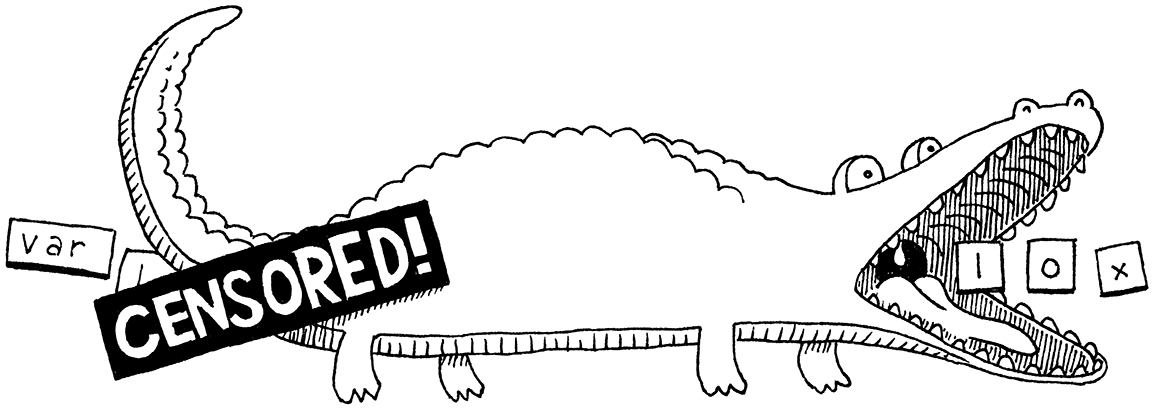
Lexical errors
如果 character 不属于任何合法 token,scanner 报告 lexical error 并继续扫描后面的 input。
Operators
Operator 的识别需要先判断当前 character,再根据下一个 character 决定是单字符还是双字符 token。
Longer Lexemes
String literals
String 从双引号开始,scanner 持续读取直到另一个双引号。String 可以跨越 newline;到 source 结尾仍未遇到 closing quote 时,报告 unterminated string error。
Number literals
Number 读取连续 digit;如果遇到 dot 且 dot 后仍有 digit,就继续读取 fractional part,最后转换为 numeric literal value。
Reserved Words and Identifiers
Identifier 以 letter 或 underscore 开始,后面可以跟 letter、digit 或 underscore。Scanner 先读取完整文字,再查询 reserved-word map;匹配到就生成 keyword token,否则生成 IDENTIFIER token。
Challenges
练习包括 block comment、字符串转义、数字格式、新 operator 和 error-recovery 策略。应在代码副本上完成。
Design Note:Implicit Semicolons
有些 language 允许省略 statement 末尾的 semicolon,在 newline 或其他位置自动插入。这样可以让 source 更简洁,但会增加 scanner、parser 和错误信息的复杂度。
Lox 选择显式 semicolon,因为规则简单、歧义少,也适合手写 scanner。
原文代码
下面保留本章原文中的全部 Java code block;代码内容不翻译,仅翻译 surrounding prose。 +### Code block 1
package

com.craftinginterpreters.lox
;


import

java.io.BufferedReader
;

import

java.io.IOException
;

import

java.io.InputStreamReader
;

import

java.nio.charset.Charset
;

import

java.nio.file.Files
;

import

java.nio.file.Paths
;

import

java.util.List
;


public

class

Lox
 {

public

static

void

main
(
String
[]
args
)
throws

IOException
 {

if
 (
args
.
length
 >
1
) {

System
.
out
.
println
(
"Usage: jlox [script]"
);

System
.
exit
(
64
);


    }
else

if
 (
args
.
length
 ==
1
) {

runFile
(
args
[
0
]);
    }
else
 {

runPrompt
();
    }
  }
}
Code block 2
private

static

void

runFile
(
String

path
)
throws

IOException
 {

byte
[]
bytes
 =
Files
.
readAllBytes
(
Paths
.
get
(
path
));

run
(
new

String
(
bytes
,
Charset
.
defaultCharset
()));
  }
Code block 3
(
print
 (
eval
 (
read
)))
Code block 4
private

static

void

runPrompt
()
throws

IOException
 {

InputStreamReader

input
 =
new

InputStreamReader
(
System
.
in
);

BufferedReader

reader
 =
new

BufferedReader
(
input
);


for
 (;;) {


System
.
out
.
print
(
"> "
);

String

line
 =
reader
.
readLine
();

if
 (
line
 ==
null
)
break
;

run
(
line
);
    }
  }
Code block 5
private

static

void

run
(
String

source
) {

Scanner

scanner
 =
new

Scanner
(
source
);

List
<
Token
>
tokens
 =
scanner
.
scanTokens
();


// For now, just print the tokens.


for
 (
Token

token
 :
tokens
) {

System
.
out
.
println
(
token
);
    }
  }
Code block 6
static

void

error
(
int

line
,
String

message
) {

report
(
line
,
""
,
message
);
  }


private

static

void

report
(
int

line
,
String

where
,

String

message
) {

System
.
err
.
println
(

"[line "
 +
line
 +
"] Error"
 +
where
 +
": "
 +
message
);

hadError
 =
true
;
  }
Code block 7
Error: Unexpected "," somewhere in your code. Good luck finding it!
Code block 8
Error: Unexpected "," in argument list.

    15 | function(first, second,);
                               ^-- Here.
Code block 9
public class Lox {
Code block 10
static

boolean

hadError
 =
false
;
Code block 11
run(new String(bytes, Charset.defaultCharset()));
Code block 12
// Indicate an error in the exit code.


if
 (
hadError
)
System
.
exit
(
65
);
Code block 13
}
Code block 14
run(line);
Code block 15
hadError
 =
false
;
Code block 16
}
Code block 17
var

language
 =
"lox"
;
Code block 18
package

com.craftinginterpreters.lox
;


enum

TokenType
 {

// Single-character tokens.


LEFT_PAREN
,
RIGHT_PAREN
,
LEFT_BRACE
,
RIGHT_BRACE
,

COMMA
,
DOT
,
MINUS
,
PLUS
,
SEMICOLON
,
SLASH
,
STAR
,


// One or two character tokens.


BANG
,
BANG_EQUAL
,

EQUAL
,
EQUAL_EQUAL
,

GREATER
,
GREATER_EQUAL
,

LESS
,
LESS_EQUAL
,


// Literals.


IDENTIFIER
,
STRING
,
NUMBER
,


// Keywords.


AND
,
CLASS
,
ELSE
,
FALSE
,
FUN
,
FOR
,
IF
,
NIL
,
OR
,

PRINT
,
RETURN
,
SUPER
,
THIS
,
TRUE
,
VAR
,
WHILE
,


EOF

}
Code block 19
package

com.craftinginterpreters.lox
;


class

Token
 {

final

TokenType

type
;

final

String

lexeme
;

final

Object

literal
;

final

int

line
;


Token
(
TokenType

type
,
String

lexeme
,
Object

literal
,
int

line
) {

this
.
type
 =
type
;

this
.
lexeme
 =
lexeme
;

this
.
literal
 =
literal
;

this
.
line
 =
line
;
  }


public

String

toString
() {

return

type
 +
" "
 +
lexeme
 +
" "
 +
literal
;
  }
}
Code block 20
[a-zA-Z_][a-zA-Z_0-9]*
Code block 21
package

com.craftinginterpreters.lox
;


import

java.util.ArrayList
;

import

java.util.HashMap
;

import

java.util.List
;

import

java.util.Map
;


import static

com.craftinginterpreters.lox.TokenType.*
;


class

Scanner
 {

private

final

String

source
;

private

final

List
<
Token
>
tokens
 =
new

ArrayList
<>();


Scanner
(
String

source
) {

this
.
source
 =
source
;
  }
}
Code block 22
List
<
Token
>
scanTokens
() {

while
 (!
isAtEnd
()) {

// We are at the beginning of the next lexeme.


start
 =
current
;

scanToken
();
    }


tokens
.
add
(
new

Token
(
EOF
,
""
,
null
,
line
));

return

tokens
;
  }
Code block 23
private final List<Token> tokens = new ArrayList<>();
Code block 24
private

int

start
 =
0
;

private

int

current
 =
0
;

private

int

line
 =
1
;
Code block 25
Scanner(String source) {
Code block 26
private

boolean

isAtEnd
() {

return

current
 >=
source
.
length
();
  }
Code block 27
private

void

scanToken
() {

char

c
 =
advance
();

switch
 (
c
) {

case

'('
:
addToken
(
LEFT_PAREN
);
break
;

case

')'
:
addToken
(
RIGHT_PAREN
);
break
;

case

'{'
:
addToken
(
LEFT_BRACE
);
break
;

case

'}'
:
addToken
(
RIGHT_BRACE
);
break
;

case

','
:
addToken
(
COMMA
);
break
;

case

'.'
:
addToken
(
DOT
);
break
;

case

'-'
:
addToken
(
MINUS
);
break
;

case

'+'
:
addToken
(
PLUS
);
break
;

case

';'
:
addToken
(
SEMICOLON
);
break
;

case

'*'
:
addToken
(
STAR
);
break
;


    }
  }
Code block 28
private

char

advance
() {

return

source
.
charAt
(
current
++);
  }


private

void

addToken
(
TokenType

type
) {

addToken
(
type
,
null
);
  }


private

void

addToken
(
TokenType

type
,
Object

literal
) {

String

text
 =
source
.
substring
(
start
,
current
);

tokens
.
add
(
new

Token
(
type
,
text
,
literal
,
line
));
  }
Code block 29
case '*': addToken(STAR); break;
Code block 30
default
:

Lox
.
error
(
line
,
"Unexpected character."
);

break
;
Code block 31
}
Code block 32
case '*': addToken(STAR); break;
Code block 33
case

'!'
:

addToken
(
match
(
'='
) ?
BANG_EQUAL
 :
BANG
);

break
;

case

'='
:

addToken
(
match
(
'='
) ?
EQUAL_EQUAL
 :
EQUAL
);

break
;

case

'<'
:

addToken
(
match
(
'='
) ?
LESS_EQUAL
 :
LESS
);

break
;

case

'>'
:

addToken
(
match
(
'='
) ?
GREATER_EQUAL
 :
GREATER
);

break
;
Code block 34
default:
Code block 35
private

boolean

match
(
char

expected
) {

if
 (
isAtEnd
())
return

false
;

if
 (
source
.
charAt
(
current
) !=
expected
)
return

false
;


current
++;

return

true
;
  }
Code block 36
break;
Code block 37
case

'/'
:

if
 (
match
(
'/'
)) {

// A comment goes until the end of the line.


while
 (
peek
() !=
'\n'
 && !
isAtEnd
())
advance
();
        }
else
 {

addToken
(
SLASH
);
        }

break
;
Code block 38
default:
Code block 39
private

char

peek
() {

if
 (
isAtEnd
())
return

'\0'
;

return

source
.
charAt
(
current
);
  }
Code block 40
break;
Code block 41
case

' '
:

case

'\r'
:

case

'\t'
:

// Ignore whitespace.


break
;


case

'\n'
:

line
++;

break
;
Code block 42
default:
        Lox.error(line, "Unexpected character.");
Code block 43
// this is a comment

(( )){}
// grouping stuff

!*+-/=<> <= ==
// operators
Code block 44
break;
Code block 45
case

'"'
:
string
();
break
;
Code block 46
default:
Code block 47
private

void

string
() {

while
 (
peek
() !=
'"'
 && !
isAtEnd
()) {

if
 (
peek
() ==
'\n'
)
line
++;

advance
();
    }


if
 (
isAtEnd
()) {

Lox
.
error
(
line
,
"Unterminated string."
);

return
;
    }


// The closing ".


advance
();


// Trim the surrounding quotes.


String

value
 =
source
.
substring
(
start
 +
1
,
current
 -
1
);

addToken
(
STRING
,
value
);
  }
Code block 48
print
 -
123
.
abs
();
Code block 49
var

n
 =
123
;

print
 -
n
.
abs
();
Code block 50
1234


12.34
Code block 51
.
1234


1234
.
Code block 52
default:
Code block 53
if
 (
isDigit
(
c
)) {

number
();
        }
else
 {

Lox
.
error
(
line
,
"Unexpected character."
);
        }
Code block 54
break;
Code block 55
private

boolean

isDigit
(
char

c
) {

return

c
 >=
'0'
 &&
c
 <=
'9'
;
  }
Code block 56
private

void

number
() {

while
 (
isDigit
(
peek
()))
advance
();


// Look for a fractional part.


if
 (
peek
() ==
'.'
 &&
isDigit
(
peekNext
())) {

// Consume the "."


advance
();


while
 (
isDigit
(
peek
()))
advance
();
    }


addToken
(
NUMBER
,

Double
.
parseDouble
(
source
.
substring
(
start
,
current
)));
  }
Code block 57
private

char

peekNext
() {

if
 (
current
 +
1
 >=
source
.
length
())
return

'\0'
;

return

source
.
charAt
(
current
 +
1
);
  }
Code block 58
case

'o'
:

if
 (
match
(
'r'
)) {

addToken
(
OR
);
  }

break
;
Code block 59
---
a
;
Code block 60
- --
a
;
Code block 61
-- -
a
;
Code block 62
default:
        if (isDigit(c)) {
          number();
Code block 63
}
else

if
 (
isAlpha
(
c
)) {

identifier
();
Code block 64
} else {
          Lox.error(line, "Unexpected character.");
        }
Code block 65
private

void

identifier
() {

while
 (
isAlphaNumeric
(
peek
()))
advance
();


addToken
(
IDENTIFIER
);
  }
Code block 66
private

boolean

isAlpha
(
char

c
) {

return
 (
c
 >=
'a'
 &&
c
 <=
'z'
) ||
           (
c
 >=
'A'
 &&
c
 <=
'Z'
) ||

c
 ==
'_'
;
  }


private

boolean

isAlphaNumeric
(
char

c
) {

return

isAlpha
(
c
) ||
isDigit
(
c
);
  }
Code block 67
private

static

final

Map
<
String
,
TokenType
>
keywords
;


static
 {

keywords
 =
new

HashMap
<>();

keywords
.
put
(
"and"
,
AND
);

keywords
.
put
(
"class"
,
CLASS
);

keywords
.
put
(
"else"
,
ELSE
);

keywords
.
put
(
"false"
,
FALSE
);

keywords
.
put
(
"for"
,
FOR
);

keywords
.
put
(
"fun"
,
FUN
);

keywords
.
put
(
"if"
,
IF
);

keywords
.
put
(
"nil"
,
NIL
);

keywords
.
put
(
"or"
,
OR
);

keywords
.
put
(
"print"
,
PRINT
);

keywords
.
put
(
"return"
,
RETURN
);

keywords
.
put
(
"super"
,
SUPER
);

keywords
.
put
(
"this"
,
THIS
);

keywords
.
put
(
"true"
,
TRUE
);

keywords
.
put
(
"var"
,
VAR
);

keywords
.
put
(
"while"
,
WHILE
);
  }
Code block 68
while (isAlphaNumeric(peek())) advance();
Code block 69
String

text
 =
source
.
substring
(
start
,
current
);

TokenType

type
 =
keywords
.
get
(
text
);

if
 (
type
 ==
null
)
type
 =
IDENTIFIER
;

addToken
(
type
);
Code block 70
}
Code block 71
if
 (
condition
)
return


"value"
Code block 72
func

(
parenthesized
)
Code block 73
first

-
second
Code block 74
a
 =
1

b
 =
2
Code block 75
console
.
log
(
function
() {

statement
();
});
~~~+

## 参考资料

- [原文:Scanning](https://craftinginterpreters.com/scanning.html)
- [Crafting Interpreters 系列索引](00%20系列索引.md)

> 版权说明:官方页面标注 © 2015–2021。原作版权归 Robert Nystrom 及相关权利人所有。本笔记为个人学习用途的中文翻译。
评论 (0)